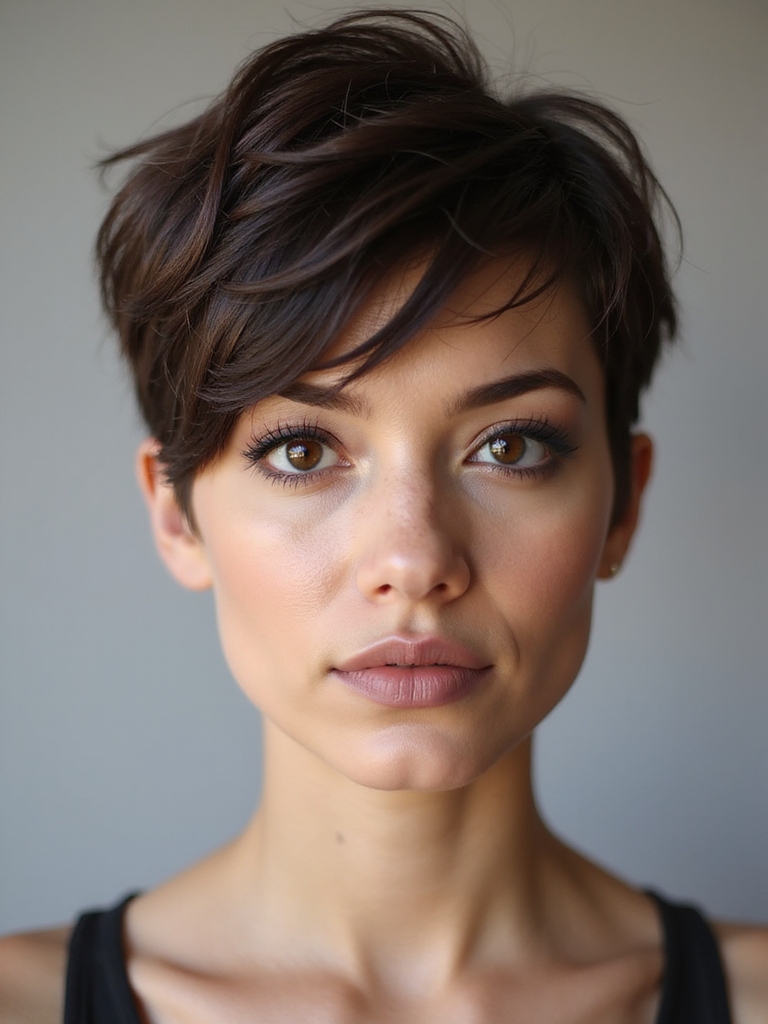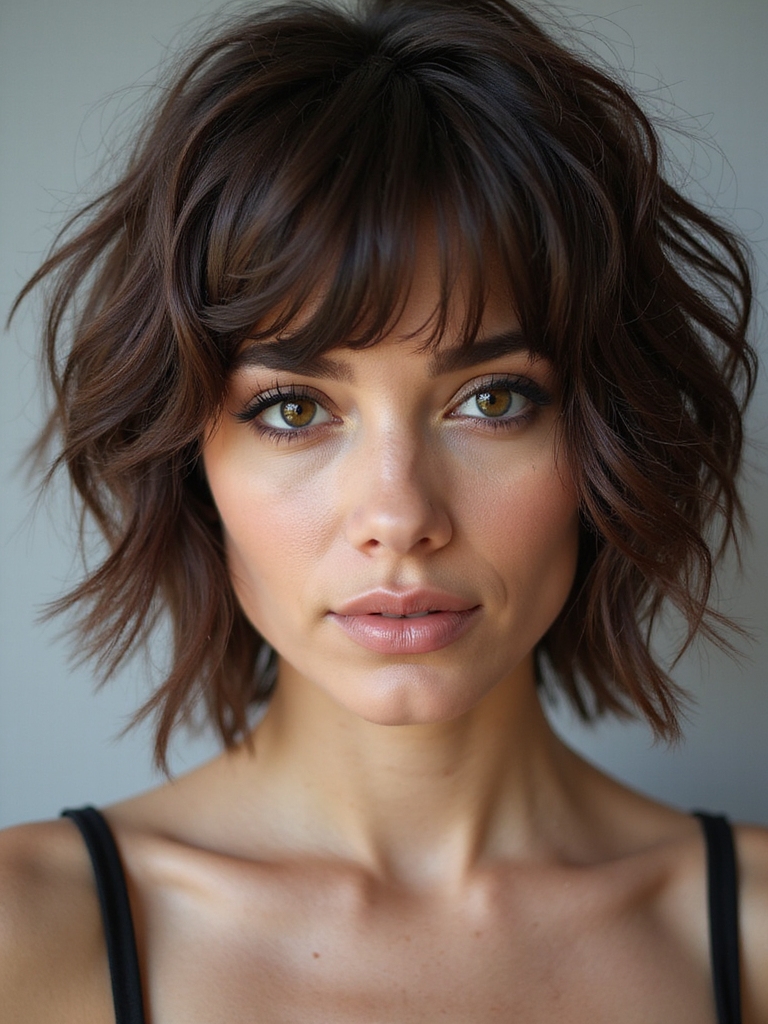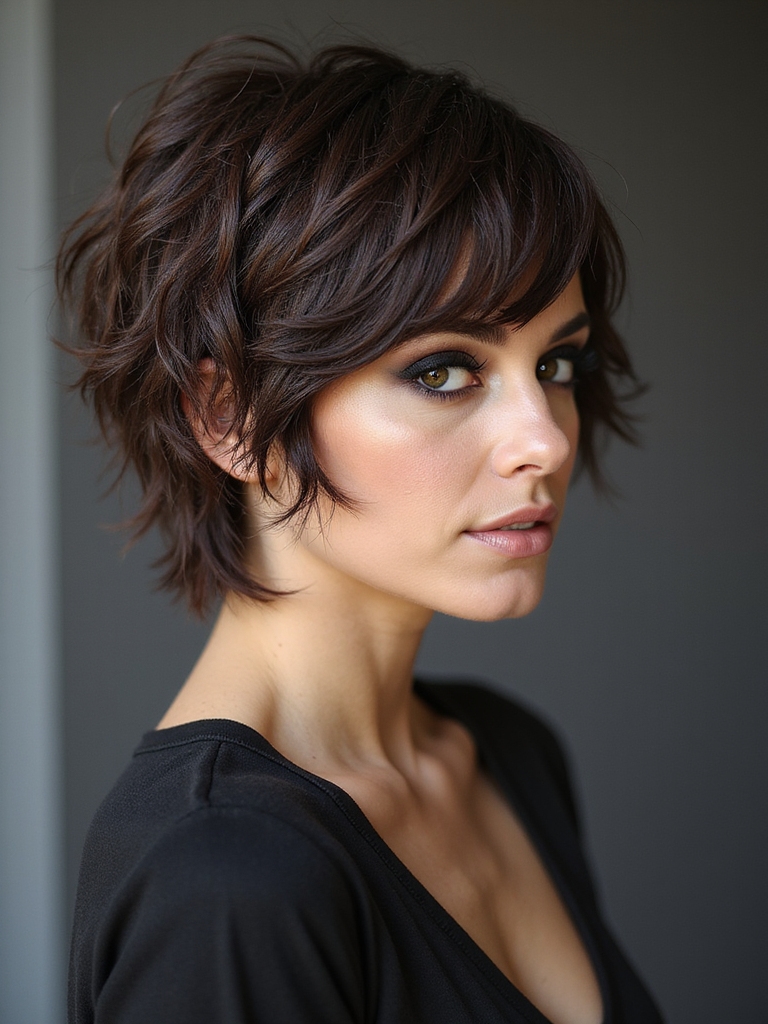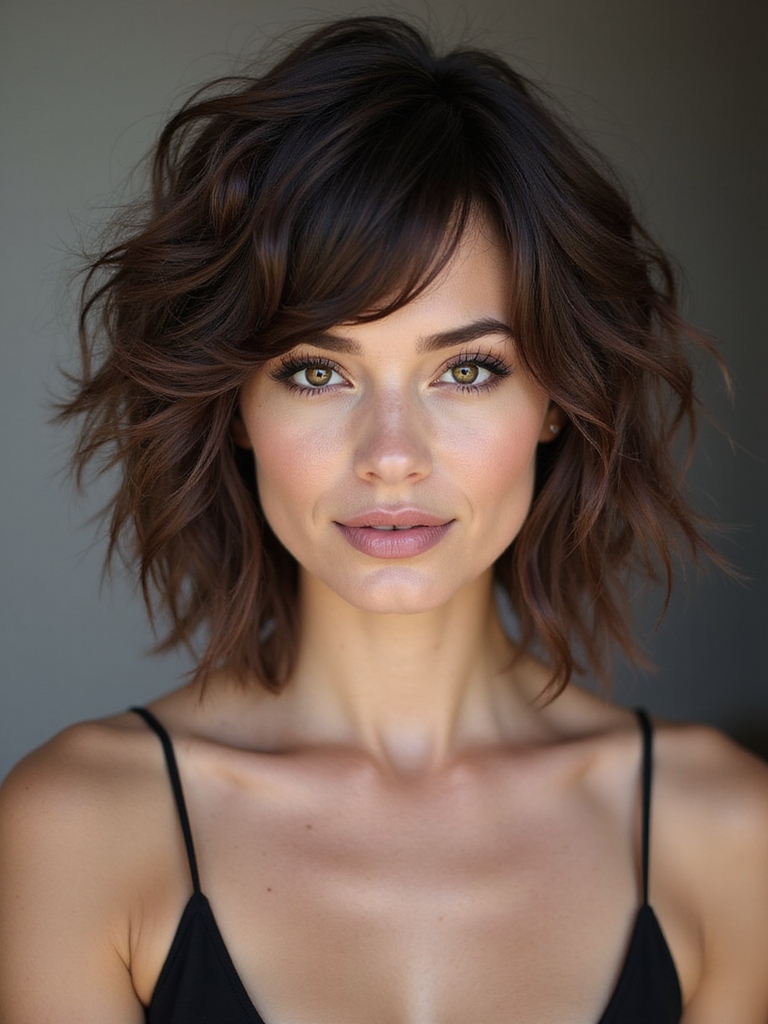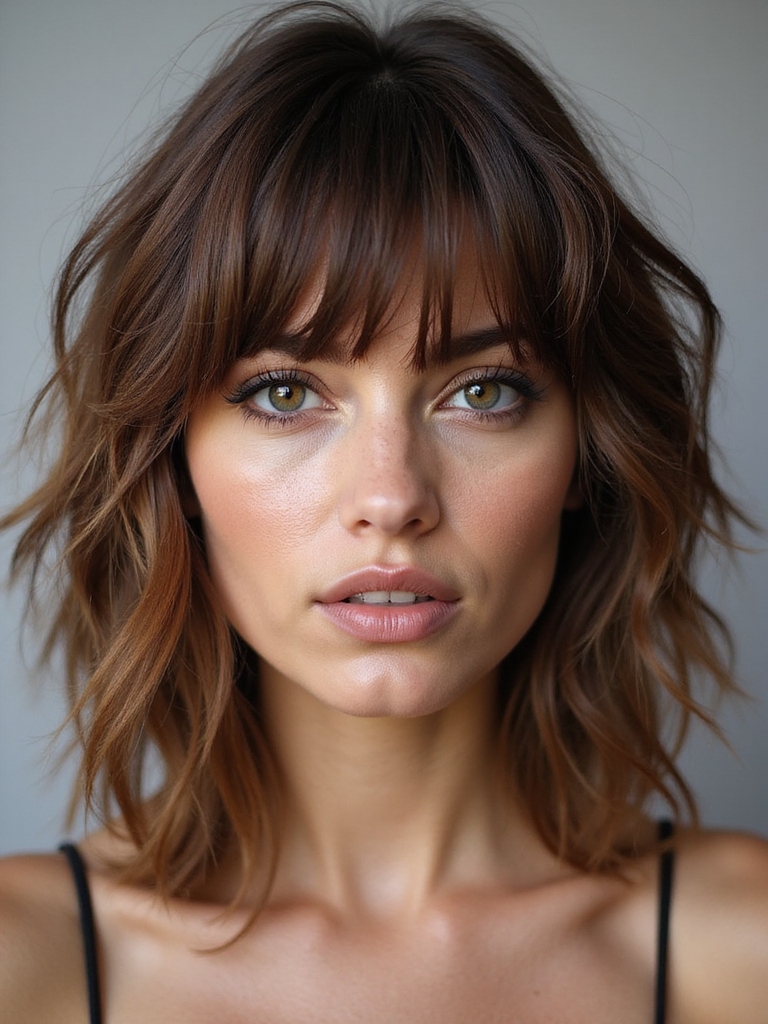
I’ve spent years watching how the right bangs can completely transform a face, and I’m convinced that face-framing shaggy bangs are the game-changer you’ve been missing.
They’re not just another trend—they’re a strategic way to soften your features and add movement to your look. But here’s the thing: they work differently depending on your face shape. Let me show you how to find your perfect match.
What Are Shaggy Bangs?

You’ve probably noticed shaggy bangs everywhere lately—they’re that effortlessly textured fringe that falls across the forehead with choppy, layered pieces rather than one blunt line.
I’m telling you, they’re versatile and flattering. Unlike traditional bangs, shaggy ones work with most face shapes because they don’t sit heavily on your features.
They blend seamlessly into your longer layers, creating movement and dimension throughout your entire hairstyle. Shags pair especially well with face-framing bangs to soften features and add instant texture.
The History of Shaggy Bangs in Fashion

I’ve watched shaggy bangs evolve from their rebellious 1970s rock origins into one of today’s most sought-after styles, and the journey’s fascinating.
Celebrity icons like Farrah Fawcett and Rod Stewart made these textured, face-framing bangs the ultimate symbol of cool, influencing trends for decades to come.
Now we’re experiencing a modern revival where stylists are reimagining shaggy bangs with fresh techniques and layering methods that work for every hair type and face shape.
This resurgence also draws on the broader revival of layered cuts, notably the 70s shag haircut adapted for long hair, bringing vintage flair into contemporary looks.
Origins in 1970s Rock
When rock ‘n’ roll was reaching its creative peak in the 1970s, musicians weren’t just revolutionizing sound—they’re completely transforming how we think about hair.
I’d argue that shaggy bangs became the ultimate symbol of rebellion and freedom. Artists like Rod Stewart and David Bowie rocked this look, inspiring millions to adopt messy, layered styles.
You got that effortless, undone vibe that screamed individuality and nonconformity. The modern shag continues to evolve with updated layering techniques that flatter many face shapes, highlighting face shape versatility.
Celebrity Influence and Trends
The shaggy bang trend didn’t just stick around—it exploded across decades because celebrities kept reinventing it for new generations.
From Farrah Fawcett‘s feathered look to today’s modern interpretations, I’ve watched A-listers make these bangs their signature move. When your favorite star rocks them, you want them too.
That’s the power of celebrity—they’ve transformed shaggy bangs from a ’70s phenomenon into a timeless style statement. Fans continue to emulate the iconic 70s shag haircut and adapt it for contemporary looks.
Modern Revival and Evolution
After years of fading in and out of mainstream fashion, shaggy bangs made their triumphant comeback in the early 2010s, and honestly, they’ve never looked better.
I’ve watched this style evolve tremendously:
- Softer, textured layers replace blunt cuts
- Celebrity endorsement drives modern adoption
- Personalization trumps one-size-fits-all approaches
- Styling versatility increases appeal
- Social media amplifies trend visibility
Today’s shaggy bangs aren’t your mom’s outdated style—they’re refined, adaptable, and genuinely flattering. Modern iterations often pair shaggy bangs with textured layers to create effortless movement and volume.
Shaggy Bangs for Round Face Shapes

If you’ve got a rounder face shape, I’m thrilled to tell you that shaggy bangs can be your secret weapon for creating definition and balance.
I’ll show you how the right length and layering techniques work to soften cheekbone prominence while adding structure to your overall look.
Let me walk you through the styling tips that’ll help you achieve that perfectly textured, face-framing effect.
The Shaggy French Bob embraces disconnected layers and lived-in texture to create movement and volume that complements shaggy bangs, making it a natural pairing for this look and its textured layers enhance the face-framing effect.
Softening Cheekbone Prominence
When you’ve got a rounder face shape, prominent cheekbones can sometimes feel like they’re stealing all the attention—but shaggy bangs are your secret weapon for balancing those features.
- Layered texture draws the eye upward
- Softens harsh cheekbone angles instantly
- Creates dimension across your face
- Breaks up facial width effectively
- Adds movement that flatters definition
Shaggy layers also create effortless, modern texture that enhances the overall look and makes styling easier with shaggy layered haircut techniques.
Length and Layering Techniques
Getting the right length and layering is what transforms shaggy bangs from a trendy idea into a face-flattering reality for round faces.
I’d recommend keeping bangs longer—chin-length or beyond—to elongate your face. Ask your stylist for choppy layers that create movement and texture. This approach breaks up roundness and adds the dimension you’re after.
A long shag with soft bangs often uses choppy layers to enhance texture and movement.
Styling Tips for Definition
Once you’ve got the cut right, styling’s where your shaggy bangs really shine—and that’s where you’ll see the most dramatic face-shaping results.
- Blow-dry them away from your face for elongation
- Use a round brush to create subtle movement
- Apply lightweight texturizing spray for definition
- Sweep them to one side occasionally
- Avoid over-straightening; welcome the shag’s natural texture
Shaggy long hair with flowy bangs can enhance natural movement and layer definition, especially when working with shaggy long hair to frame the face.
Shaggy Bangs for Square Face Shapes
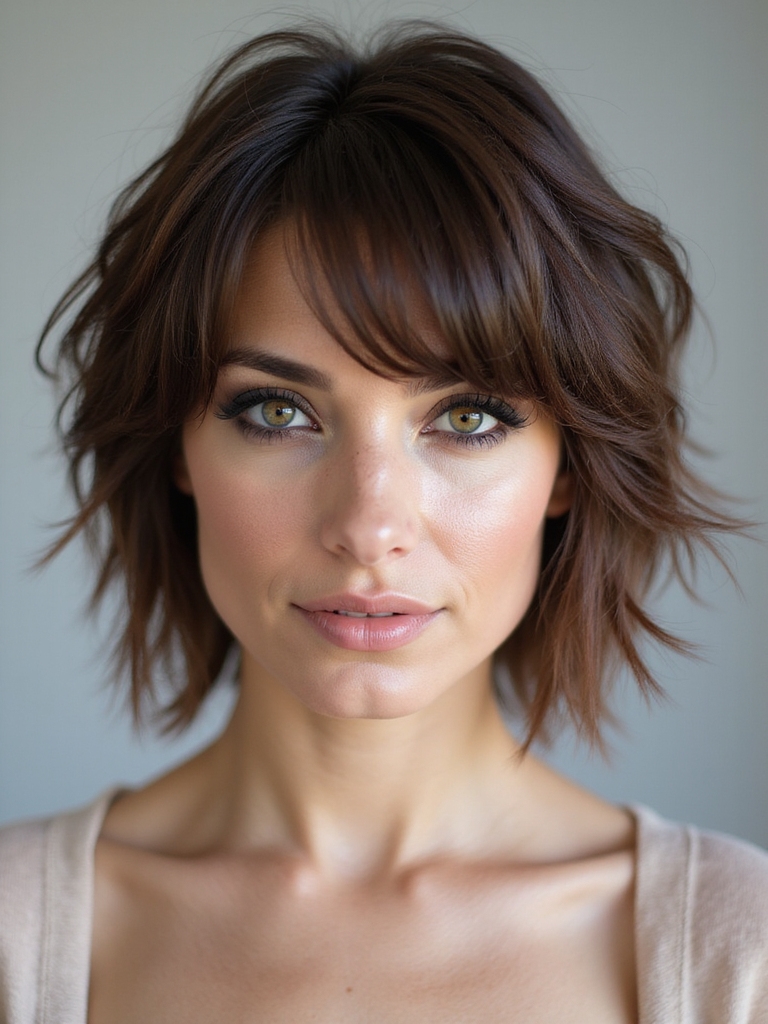
Because square faces feature prominent jawlines and angular features, you’ll want shaggy bangs that soften those sharp lines rather than emphasize them.
I’d recommend longer, textured bangs that graze your eyebrows—they’ll break up facial width beautifully.
Side-swept styles work wonders too, creating movement that counterbalances your stronger jawline.
The key’s keeping them wispy and layered for that effortlessly soft effect.
Edgy Shag Bangs add effortless texture and movement for an undone look with shag bangs.
Shaggy Bangs for Oval Face Shapes

Oval faces are wonderfully versatile when it comes to bangs, and I love working with this shape because you’ve got so much freedom.
- Wispy, layered bangs enhance natural proportions
- Side-swept styles add dimension and movement
- Full shaggy bangs frame without overwhelming
- Longer lengths complement your balanced features
- Textured layers create effortless, modern appeal
Shaggy Bangs for Heart-Shaped Faces

If you’ve got a heart-shaped face, I’m telling you that shaggy bangs are your secret weapon for balancing that wider forehead and softening your angular jawline.
The layered texture works magic because it draws attention away from the forehead’s width while the wispy ends help blur those sharp chin contours.
You’ll find that the right shaggy bang style can transform your entire look by creating movement and softness exactly where you need it most.
Balancing Wide Forehead Area
When you’ve got a heart-shaped face with a wider forehead, shaggy bangs are your secret weapon for creating visual balance. Here’s how they work:
- Draw attention downward from your forehead
- Add texture that softens harsh lines
- Create dimension with layered strands
- Frame your cheekbones beautifully
- Break up forehead width instantly
You’ll love how they transform your entire look!
Softening Angular Jawline Features
Since heart-shaped faces tend to have a pointed or angular jawline, shaggy bangs work wonders by redirecting the eye upward and softening that sharp lower third.
I’ve found that layered, face-framing bangs create movement that breaks up harsh angles beautifully. You’ll notice how the texture draws attention to your eyes instead, making your overall appearance feel more balanced and approachable.
Shaggy Bangs for Diamond-Shaped Faces

Diamond-shaped faces—characterized by prominent cheekbones and a narrow forehead and chin— really benefit from shaggy bangs’ softening effect.
- Textured layers diminish cheekbone angularity
- Wispy strands frame your face beautifully
- Length hits above eyebrows for balance
- Movement creates dimension and visual interest
- Tousled styling adds effortless sophistication
You’ll love how shaggy bangs harmonize your facial proportions while giving you that coveted, undone aesthetic.
How to Cut Shaggy Bangs at Home

I’m excited to help you master cutting shaggy bangs yourself—it’s easier than you’d think!
You’ll need to gather the right tools, section your hair properly, and understand the correct angles that’ll give you those effortlessly textured bangs.
Let me walk you through each step so you can achieve salon-quality results at home.
Gather Your Tools First
Before you plunge into cutting, let’s set up your workspace with the right supplies.
- Sharp hair scissors (not craft scissors!)
- A fine-tooth comb
- Hair clips to section your hair
- A spray bottle for dampening
- A mirror with good lighting
You’ll get cleaner cuts and better results when you’ve got quality tools ready to go.
Section and Clip Hair
With your tools in place, you’re ready to divide your hair into manageable sections—this is where precision really matters. I’ll clip away the sides and back, leaving only the front portion free. This isolation prevents accidental cuts and keeps you focused.
Work methodically through each section, ensuring even distribution. You’ll find this systematic approach makes the actual cutting process smoother and more controlled.
Cut at Proper Angles
Once you’ve isolated your front section, the angle at which you cut makes all the difference in creating that effortless, softened look.
- Hold scissors at 45-degree angles
- Point blades downward, not straight across
- Create diagonal lines for movement
- Avoid blunt horizontal cuts
- Work in small sections gradually
I’ve found that angled cuts give you natural texture and flow that straight cuts simply can’t match.
Professional Styling Techniques for Shaggy Bangs

To get that effortlessly chic shaggy bang look you’re after, I’ve found that the styling process is just as important as the cut itself.
You’ll want to blow-dry your bangs with a round brush, working them upward and outward.
This creates that signature texture and movement.
I’d recommend using a light texturizing spray or dry shampoo to enhance the natural tousled effect and keep everything in place throughout your day.
Daily Maintenance and Care Tips
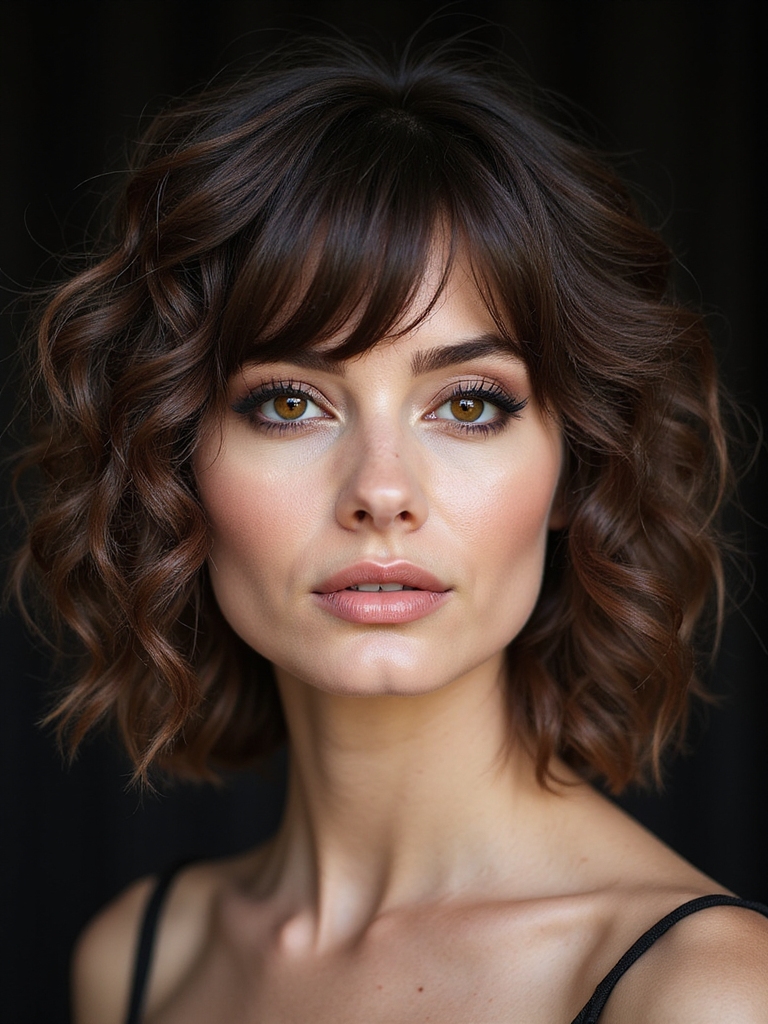
Now that you’ve mastered the styling techniques, keeping your shaggy bangs looking fresh between salon visits requires a bit of daily attention.
- Blow-dry with a round brush for movement
- Use a lightweight texturizing spray for grip
- Brush gently to prevent frizz
- Apply anti-frizz serum to ends
- Schedule trims every 4-6 weeks
You’ll maintain that effortless, softened look you love!
Styling Products That Work Best
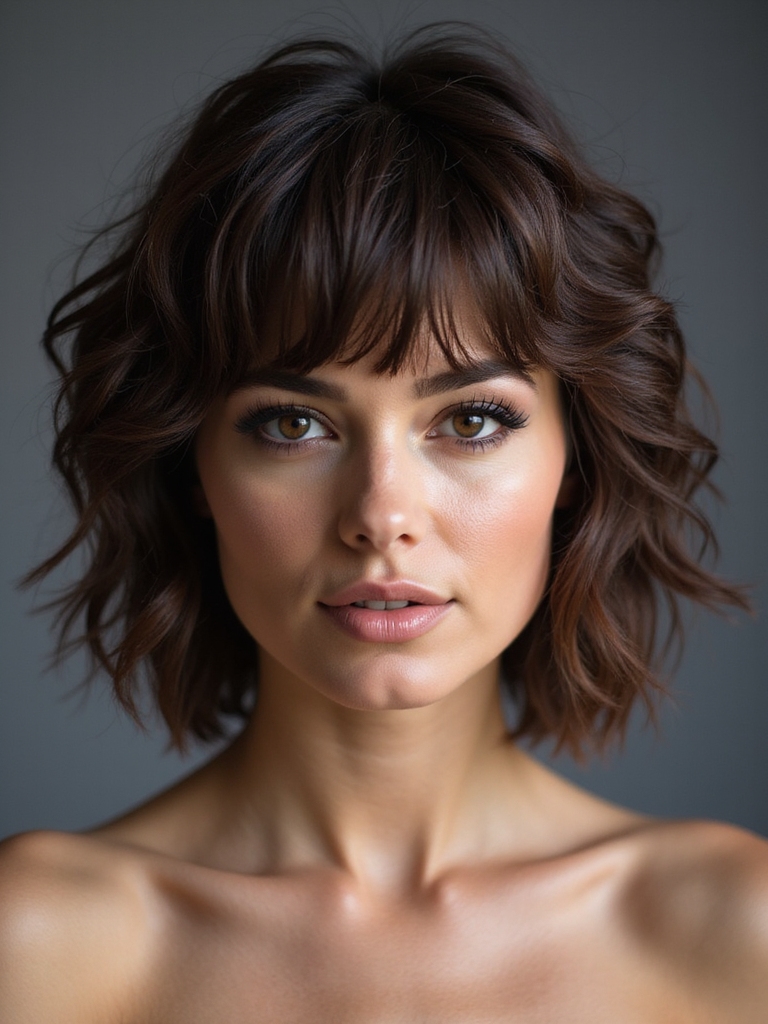
The right products can absolutely transform how your shaggy bangs look and feel throughout the day.
I’d recommend a lightweight texturizing spray to enhance your bangs’ natural movement and dimension. A good dry shampoo works wonders for grip and volume, while a smoothing serum tames frizz without weighing you down.
Find products that match your hair type for best results.
How to Blow-Dry Shaggy Bangs for Maximum Volume

While the right products lay the foundation for gorgeous shaggy bangs, your blow-drying technique is what really brings them to life.
- Use a round brush to lift roots upward
- Direct heat downward to enhance texture
- Work in sections for even volume
- Finish with cool air to set style
- Tousle with fingers for that effortless look
Pairing Shaggy Bangs With Different Haircuts
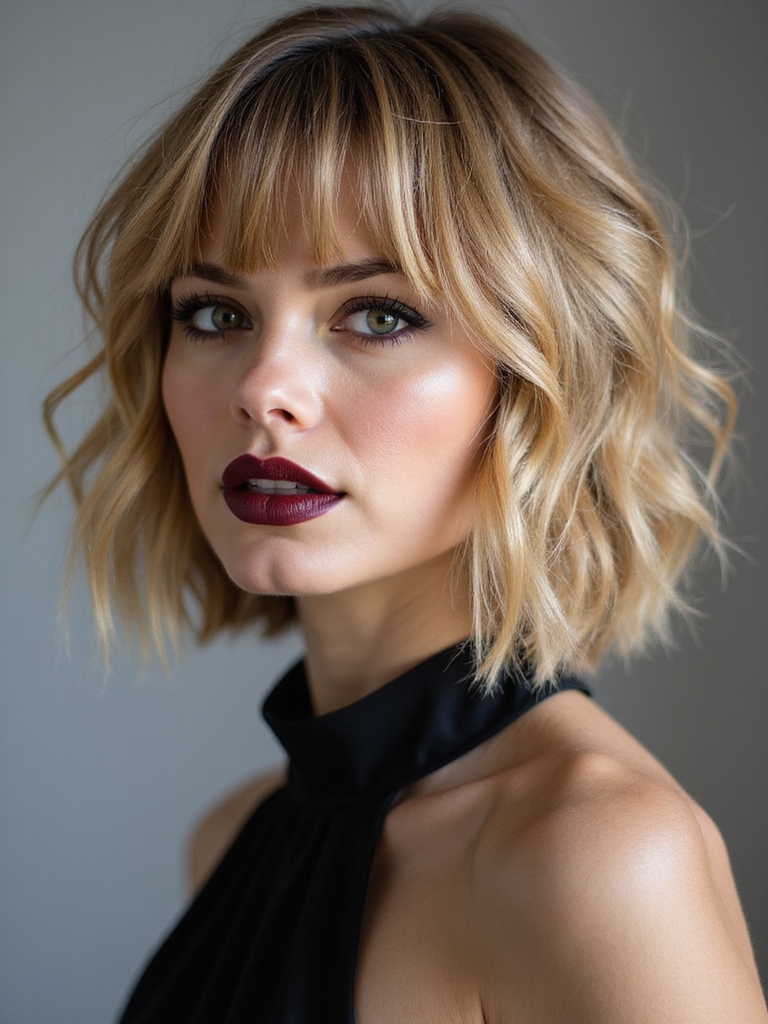
Once you’ve mastered the blow-dry technique, you’ll want to think about which haircut’ll complement your shaggy bangs best. I’ve found that shaggy bangs work beautifully with layered cuts, adding dimension and movement.
They’re equally stunning with bobs or shoulder-length styles. The key? Choose cuts that already feature texture and layers—they’ll harmonize naturally with your bangs and create that effortless, soft-focus effect you’re after.
Shaggy Bangs for Different Hair Textures

I’ve noticed that your hair texture plays a huge role in how shaggy bangs’ll look and behave, so let’s talk about making them work with whatever you’re working with.
- Straight hair: Bangs’ll sit cleanly and require regular trims
- Wavy hair: Expect soft, natural movement and texture
- Curly hair: Bangs’ll shrink; cut longer for desired length
- Fine hair: Lighter layers prevent heaviness and flatness
- Thick hair: Texturizing prevents bulk around your face
Transitioning Away From Shaggy Bangs
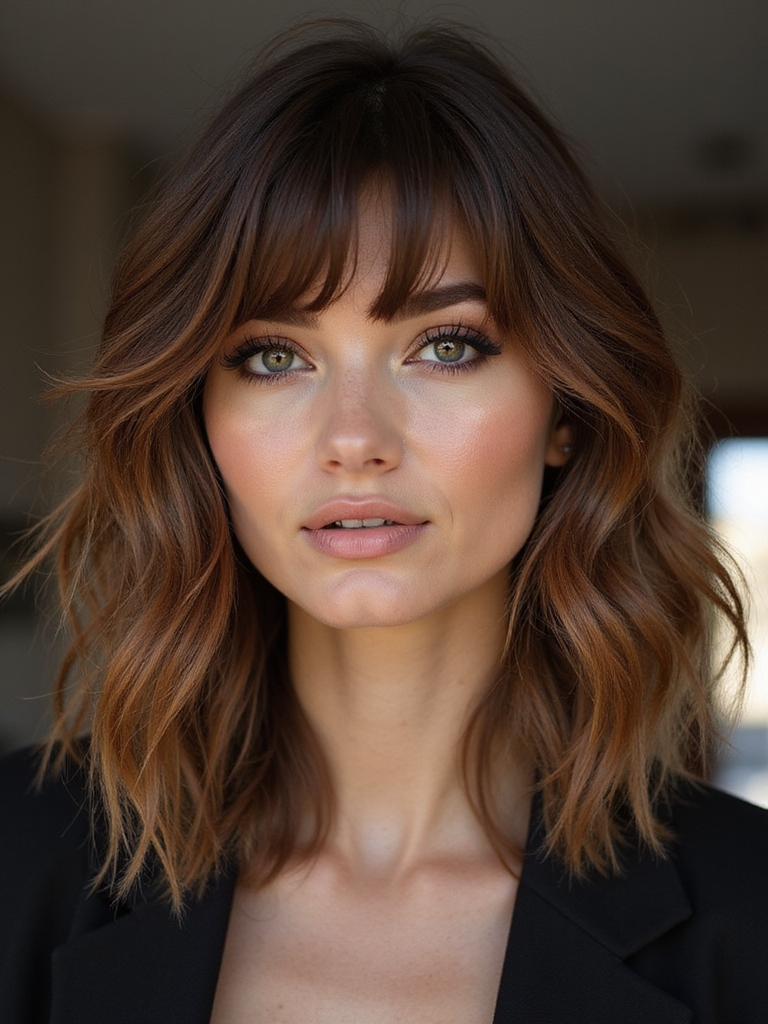
If you’ve decided shaggy bangs aren’t your vibe anymore, you don’t have to go cold turkey with a drastic cut.
I’d suggest gradually growing them out while getting regular trims to maintain shape. You can style them differently—sweep them to the side or pin them back. This approach lets you shift smoothly without feeling like you’ve lost your look overnight.
You’ll find that shaggy bangs are genuinely transformative—they’re not just trendy, they’re practical. If you’re softening a square jawline or adding movement to fine hair, they work.
The best part? They’re forgiving and easy to maintain once you’ve got your styling routine down. So grab that texturizing spray, welcome the choppy texture, and let your face-framing bangs do the heavy lifting. You’ve got this!