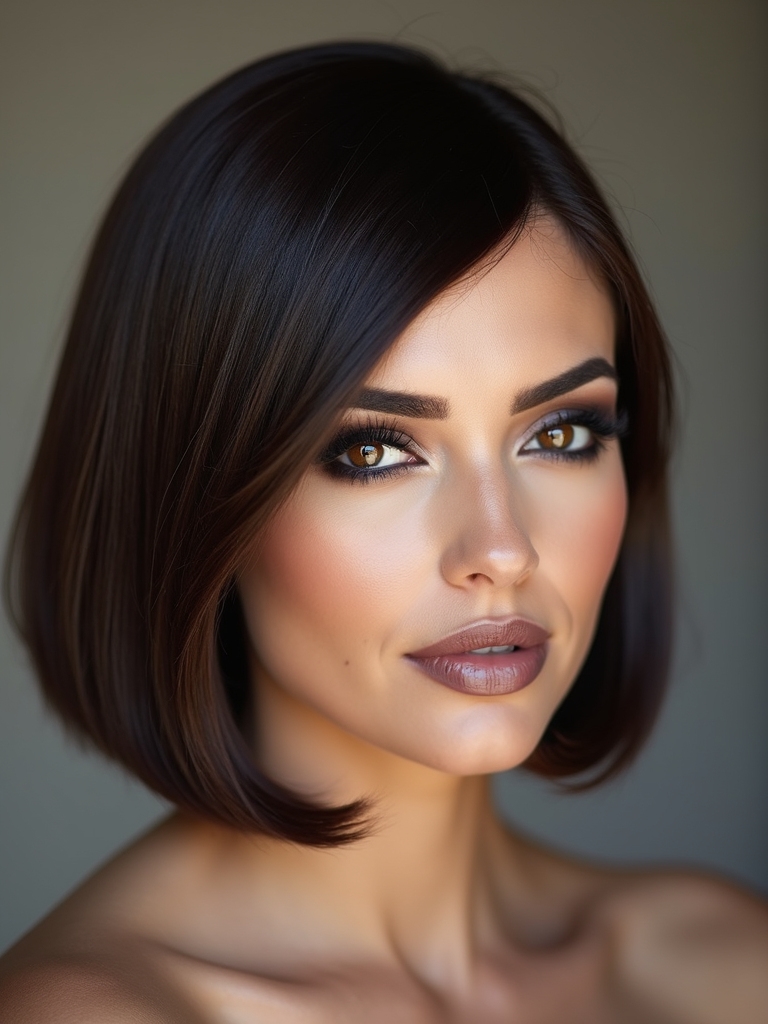
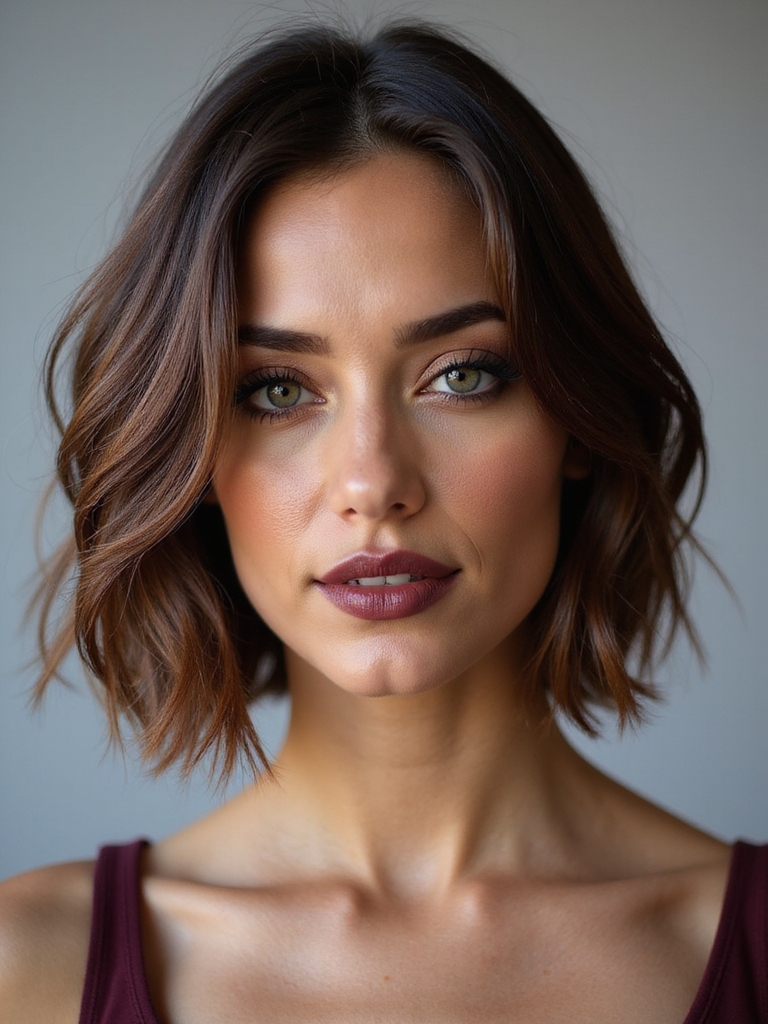
I love showing clients how a loc bob with curls can instantly add bounce and frame their face; I’ll match length to your planes—chin-grazing to soften a square jaw or collarbone to elongate a round face—and pick a part for symmetry or lift.
I shape with staggered layers, knotless blends, and defined coils set with flexi-rods or finger-twists, finish with lightweight cream and oil, and protect with silk at night. Keep going and I’ll outline exact techniques and products.
Choosing the Right Bob Length for Your Face Shape

When I size up a curly bob, I start by looking at the planes of your face—cheekbones, jawline, and forehead—to decide where the cut should land, because length changes everything: a chin-skimming bob softens a square jaw, a collarbone grazing bob elongates a round face, and a shorter, layered bob can highlight high cheekbones.
I recommend strategic length, weight removal, and subtle angles to balance features.
A chin-length A-line bob offers a sleek, structured silhouette that enhances texture and movement with precision cutting.
Curl Types and How They Change Your Look

I lean in close to study your curl pattern because the difference between a loose S-shape and a tight corkscrew changes everything about how a bob sits and moves; I’ll help you see how each texture plays with length, volume, and edge.
Loose waves soften the jaw, spiral curls add compact bounce, and coils create sculptural density—each demands tailored shaping, parting, and care to flatter your face.
I also draw on timeless loc bob principles to balance modern flair with classic styling techniques for effortless everyday wear.
Layering Techniques for Volume and Movement

I’m excited to show you how staggered layer placement can lift a loc bob and create natural, airy volume without sacrificing curl definition.
I’ll explain how shorter layers at the crown and longer lengths below bring movement, and how gentle face-framing layers soften your features and highlight cheekbones.
Together we’ll pick precise layer placements that enhance your curl pattern and keep the look balanced and effortless.
Knotless techniques can be used to reduce bulk at the roots and create a smoother, lighter finish with defined curls using knotless bob methods.
Staggered Layer Placement
By placing layers off‑set from one another, I create a staggered rhythm that gives your loc bob natural lift and effortless movement.
I map shorter and longer tiers, trimming selectively to encourage spring at the mid‑shaft and ends.
I watch density, curl pattern, and fall, then sculpt so each layer breathes, bounces, and interplays without stealing weight or disrupting the silhouette.
This approach borrows ideas from the A-Line bob with bangs to keep the overall shape modern and playful.
Face-Framing Layers
Starting with a soft crescent around your face, I carve face‑framing layers that lift the eyes and open the jawline, creating movement without sacrificing the loc bob’s weight.
I blend shorter pieces into longer curls, angling cuts to encourage bounce and prevent bulk. I check balance, refine edges, and suggest product and twisting techniques so your layers settle with natural, controlled volume.
I often recommend styling with techniques tailored for an Effortless Natural Bob to preserve texture and shape.
Parting Options: Center, Side, and Deep Parts

Curious which part will flatter your face and show off your loc bob’s curls best? I love experimenting: a center part gives symmetry and lets curls cascade evenly, a soft side part adds instant volume and flirtiness, while a deep part dramatizes one side, highlighting cheekbones and movement.
Try each, pin or clip while you assess, then commit to the one that sparks confidence.
Styling Short Versus Long Loc Bobs

While I love both lengths, short and long loc bobs behave differently and demand distinct approaches, so I tailor my styling based on their shape and movement.
I coax volume into short bobs with precise clipping, root-lifting and textured parting, while long bobs gain sway through staggered layers, lighter products and strategic pinning.
Listen to each length and respond gently.
Creating Soft Beachy Coils on Loc Ends

Because I love the way soft coils bring movement to a loc bob, I treat the ends like little canvases—moisturize gently, define with a touch of hold, and encourage a loose S-shape rather than a tight curl.
I twist small sections around my finger, diffuse on low heat or air-dry, then finger-separate for airy texture, finishing with a lightweight oil to keep bounce and shine.
Sculpted Spiral Curls for a Polished Finish

I love the way a sculpted spiral curl can turn a loc bob into something intentionally refined, so I’ll show you how to define each spiral for crisp shape.
I’ll walk you through the styling steps and product choices that lock in a sleek hold without stiffness.
Follow my cues and you’ll get polished, touchable curls that last through the day.
Defining Spiral Curl Shape
As I sculpt each spiral, I watch how twist and tension shape its memory, and I guide you through techniques that keep coils defined without looking stiff.
I feel each strand’s rhythm, teaching gentle separation, moisture balance, and targeted shaping so your loc bob sings with controlled bounce.
- Finger-twist definition
- Lightweight cream placement
- Selective clipping for silhouette
Styling for Sleek Hold
When I sculpt these spiral curls for a polished finish, I focus on tension, product placement, and heat—or lack of it—to lock in a sleek hold without crushing bounce.
I wrap each loc with mindful tension, smoothing a lightweight wax along seams and sealing with a cool air blast. I encourage spring and sheen, gently separating curls only after they fully set for lasting, controlled movement.
Maintenance Routines to Keep Curls Defined

Regularly, I check my curls the way a gardener inspects blooms—intentional, gentle, and with a plan.
I nurture shape, refresh definition, and remove stray frizz with ritual care.
My steps are simple, sensory, and precise:
- Clarify with a gentle co-wash and finger-detangle.
- Apply lightweight cream, scrunch to define.
- Seal ends and reshape with targeted palm-rolling.
Nighttime Protection Methods for Curled Locs

When night falls, I wrap my curled loc bob in a smooth satin scarf to preserve the shape and prevent frizz.
Before tucking in, I follow a simple moisture-locking routine—light leave-in, seal with a natural oil, and a gentle tuck—to keep curls defined by morning.
Let me show you how small nightly steps protect your style and extend your curl life.
Satin or Silk Wraps
I often reach for a satin or silk wrap before bed because it protects my curled locs without flattening their shape, locks in moisture, and cuts down on frizz by reducing friction against pillowcases.
I tuck edges gently, secure with a soft band, and wake to defined coils.
- Smooth surface
- Gentle tie technique
- Breathable fabric
Moisture-Locking Nightly Routine
Often I end my day with a simple, intentional routine that seals moisture into my curled locs so they stay defined and healthy by morning.
I spritz a lightweight leave-in, warm a tiny bit of jojoba oil between palms, and palm-roll loose curls into place.
Then I bonnet and silk scarf gently, ensuring airflow yet protection, and sleep knowing they’ll wake bouncy and nourished.
Product Recommendations for Hold and Shine

Because curl definition and shine depend on texture and moisture balance, I recommend building a small, purposeful product kit rather than stacking everything at once.
I choose lightweight cream, a nourishing gloss, and a flexible gel to sculpt without crunch.
My routine:
- Lightweight curl cream for moisture and soft hold
- Nourishing oil gloss for reflective shine
- Flexible gel for long-lasting definition
Heat Styling Safely on Locs With Curls

When I heat-style my loc bob to refresh the curls, I keep the dryer or flat iron on the lowest effective setting to prevent frying the hair.
I always apply a lightweight heat protectant or natural oil barrier and let the product sit so each loc is shielded before any heat touches it.
And because heat weakens the hair over time, I limit styling sessions to occasional touch-ups rather than a daily routine.
Use Low Heat
If I’m going to use heat on my locs with curls, I choose the lowest setting that still gives me control, because gentle warmth loosens kinks without stripping moisture or weakening the ropes.
I listen to my hair, move slowly, and coax shape rather than force it.
- Test on a hidden coil.
- Use short passes.
- Finish with cool air to set.
Protect With Barrier
After using low heat to coax shape, I always seal a protective barrier next — it keeps the heat from stealing moisture and helps the curls hold their pattern.
I gently mist with a lightweight heat protectant, then smooth a thin layer of oil or silicone-free serum along each loc.
That thin shield preserves definition, reduces frizz, and lets me style confidently without sacrificing elasticity.
Limit Styling Frequency
I rarely heat-style my locs more than once or twice a month, and that restraint has been one of the best things I’ve done for their curl pattern and strength.
I preserve moisture, prevent breakage, and savor natural bounce.
- Schedule styling days and stick to them.
- Use low heat and quick passes.
- Deep condition between sessions.
Accessorizing Curled Loc Bobs

I love dressing up my curled loc bob because the right accessory instantly sharpens the look and reflects your mood.
I choose delicate pins for daytime, bold cuffs for evening, and silk scarves to add color and protect curls.
Clip near the part to lift, place cuffs mid-shaft for rhythm, or wrap a scarf as a headband to frame the face.
Transitioning From Straight Locs to a Curled Bob

Switching my straight locs into a curled bob feels like giving myself permission to play—there’s a blend of strategy and delight in the process.
I guide you through shaping, protecting, and setting curl patterns with clarity, choosing tools and timing to preserve health while creating bounce.
- Section and protect ends
- Use heat or flexi-rods judiciously
- Finish with lightweight hold and oil
Customizing Curls for Different Hair Textures

Because every curl pattern responds differently to tension, heat, and products, I start by feeling the hair and mapping its natural tendencies before I touch a rod or iron.
I adjust curl size, direction, and product weight to match porosity and coil tightness, recommending lighter creams for fine locs and richer but non-greasy butters for dense textures, always testing a small section first.
Salon Services and At-Home Techniques for Curled Loc Bobs

Often I recommend combining salon precision with home maintenance so your curled loc bob stays defined and healthy between appointments.
I guide clients toward gentle deep-cleanses, protective trims, and curl-setting techniques, then teach at-home rituals to preserve shape and moisture.
- Professional: precision trims and heat-free curl setting.
- Routine: sulfate-free cleansing and weekly deep conditioning.
- At-home: silk wraps, finger-coiling, and light oiling.
I hope this guide sparks the same thrill I get when a fresh curled loc bob bounces into view — it’s like hearing a favorite song start. Trust your face, texture and lifestyle to lead you: pick the length that frames you, choose curls that sing, and layer for movement.
Experiment with parts and accessories, and don’t fear salon help or home practice. Nurture your locs, and watch your bob become a bold, living statement.