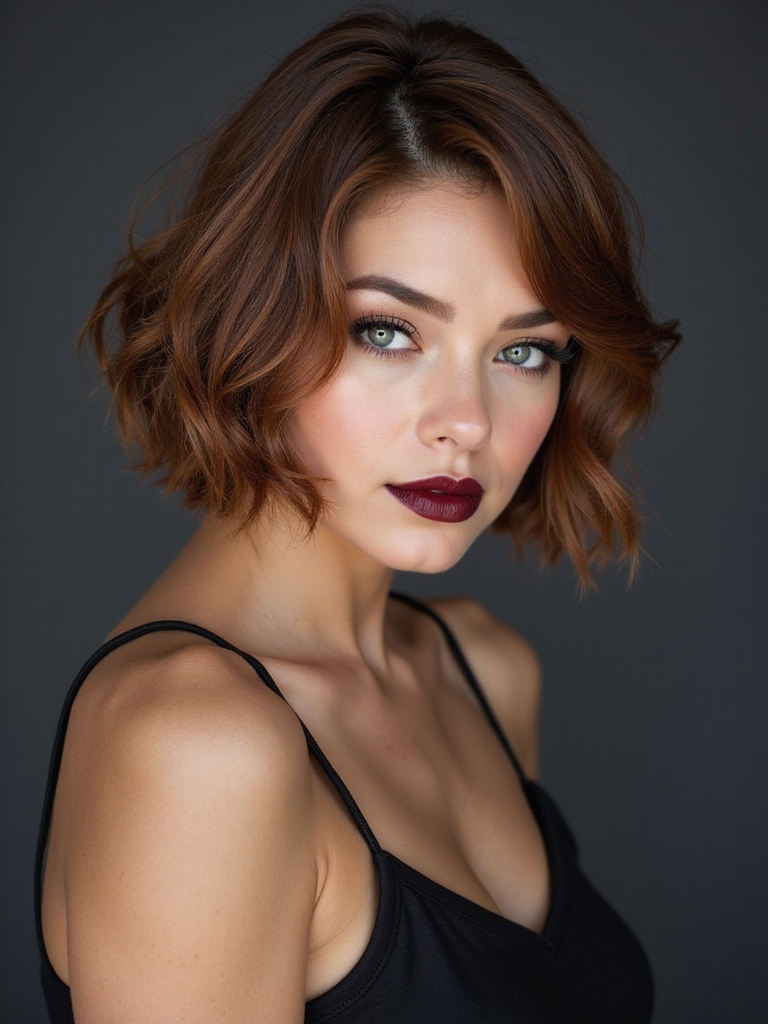
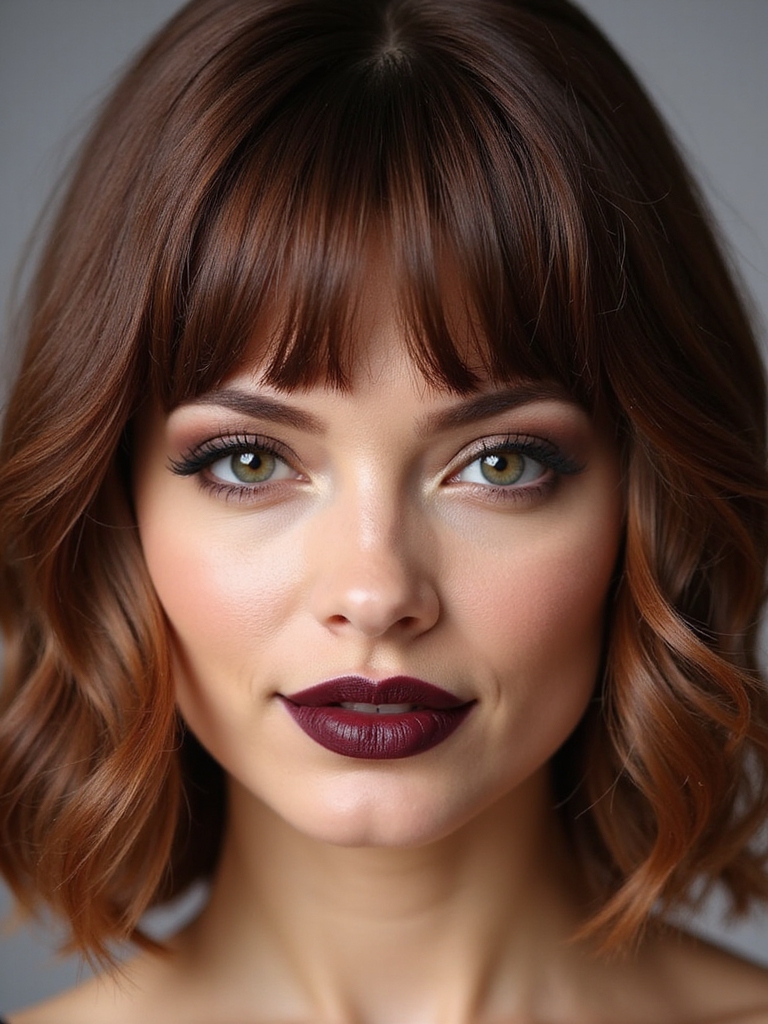
I’ve turned heavy, unruly hair into a polished stacked bob that removes bulk, lifts the crown, and keeps movement so styling’s faster and more intentional. I use graduated back layers and longer face-framing pieces to soften features and control density without losing bounce.
Textured slicing, point cutting and blended layers give shape that sits rounded, not boxy. Pick a length to flatter your face and you’ll get instant shape — keep going and I’ll show how to ask your stylist and maintain it.
What Is a Stacked Bob and Why It Works for Thick Hair

Think of a stacked bob as a smart, sculpted haircut that gives thick hair shape and movement without feeling heavy—I’ve seen it transform unruly volume into a polished, wearable style.
I explain how shorter, graduated back layers remove bulk while longer front pieces frame your face, creating balance and effortless swing.
It controls density, boosts texture, and makes styling faster, so thick hair feels manageable and chic.
Stacked bobs often rely on graduated layers to build that signature stacked effect and added dimension.
Choosing the Right Length for Your Face Shape

I know picking the right bob length can make all the difference, so let’s match cuts to faces: chin-length bobs soften round faces, collarbone-length styles balance long faces, and jaw-focused cuts sharpen square faces.
I’ll walk you through how each length works with thick hair and what to ask your stylist. Tell me which face shape you have and I’ll give specific tips.
Stacked bobs add volume and structure, creating a flattering stacked bob silhouette for thick hair.
Chin-Length for Round Faces
Because round faces benefit from angles, I usually recommend a chin-length stacked bob that hits just below the jaw to create definition and elongate the neck.
I love guiding clients through cuts that feel fresh and flattering. Try these tips:
- Add subtle layers for movement.
- Keep longer front pieces to slim the face.
- Use volume at the crown, not the cheeks.
Stacked bobs are a go-to in collections of chic short styles and can be tailored to hair density with short stacked bob techniques.
Collarbone for Long Faces
For long faces, I recommend a collarbone-length stacked bob because it balances vertical proportions without hiding your features; it hits at a flattering point that shortens the appearance of the face while still offering movement and body.
I’ll help you choose layers and subtle face-framing to soften length, add fullness around the jawline, and keep styling low-maintenance yet polished.
Layered, stacked cuts also add lift and dimension to thick hair, creating shape and body with stacked layers that enhance volume at the crown.
Jaw-Focused for Square Faces
A jaw-focused stacked bob can soften a square face by drawing attention away from a strong jawline and toward flattering angles; I’ll help you pick the perfect length that balances structure with movement.
I recommend:
- Bite-length to hug the jaw and reduce width.
- Mid-jaw for versatility and softening.
- Slightly below jaw with layers for movement and elongation.
We’ll tailor it to your features.
Stacked bobs are also a great choice for fine hair because their stacked layers create lift and the graduated shape adds the illusion of thickness.
Layering Techniques to Reduce Bulk Without Losing Volume

I know how frustrating thick hair can feel, so I want to show you layering techniques that trim weight but keep lift.
By using strategic interior layering, point-cutting the ends, and vertical slide cuts, we can remove bulk where it hides while preserving that rounded, voluminous shape.
Stick with me and I’ll explain when and why to use each method so your stacked bob stays light, full, and easy to style.
Blending these approaches creates voluminous stacked bobs that add dimension without sacrificing manageability.
Strategic Interior Layering
When I tackle interior layering on a stacked bob, I focus on carving weight away from the bulk while keeping bounce at the ends so your hair still reads full and healthy.
I gently remove interior mass, preserving outer perimeter strength.
Try these tweaks:
- Slice selective interior sections.
- Use vertical thinning for lift.
- Maintain longer outer lengths for shape and movement.
Stacked bobs often rely on sleek stacked bob lines to create an elegant silhouette without adding bulk.
Point-Cutting Ends
Start by angling your scissors and tapping the ends—point-cutting is my go-to for shaving bulk while keeping that airy, voluminous finish.
I work in small sections, snipping vertically to soften heavy edges and prevent a blunt, boxy look.
You’ll feel lighter without losing bounce.
I check balance frequently, trusting subtle moves to preserve shape and movement.
Vertical Slide Cutting
Because heavy bobs can still look bulky even after point-cutting, I use vertical slide cutting to thin the weight while keeping lift and movement.
I gently slide the shears vertically, preserving length but removing density so your shape stays bold and bouncy.
Try these steps:
- Section and angle for natural fall.
- Slide with relaxed tension.
- Check balance and blend.
Short Stacked Bob Styles for Bold, High-Impact Looks

I love how a short stacked bob can punch up your look overnight — it’s bold, sculpted, and made to show off thick hair’s best angles.
I’ll walk you through edgy silhouettes, gravity-defying stacks, and crisp nape lines that create instant attitude.
We’ll talk about texture tweaks and maintenance tips so your cut stays fierce without extra fuss, honoring your hair’s volume.
Medium-Length Stacked Bobs for Versatile Everyday Wear

I love how medium-length stacked bobs give you face-framing layers that soften features without weighing thick hair down.
The textured ends add movement and make it easy to switch from polished to messy in minutes.
I’ll show you a few low-maintenance styling tricks that keep this cut looking fresh every day.
Face-Framing Layers
Lifting the front layers slightly so they graze your cheekbones can transform a medium-length stacked bob into an everyday style that flatters every mood. I love how face-framing layers brighten your features and soften angles.
Try these quick tweaks:
- Sweep forward for instant lift.
- Tuck behind ear for polish.
- Tousle gently for casual flair.
You’ll feel confident and effortless.
Textured Ends
Often I reach for a texturizing shear when I want a medium-length stacked bob to feel more lived-in and flexible; textured ends give your thick hair movement without bulk.
I love how subtle slicing softens heavy lines, lets layers blend, and creates playful swing.
You’ll get shape that’s intentional, not stiff, and hair that responds to your day—effortless-looking, but thoughtfully cut.
Low-Maintenance Styling
Usually I keep things simple so my medium-length stacked bob works with my mornings, not against them.
I love low-maintenance styling that still looks polished. Try my quick routine:
- Damp roots, blow-dry with a round brush for lift.
- Add a few texturizing spray puffs for movement.
- Finish with light-hold hairspray to keep shape.
It’s fast, flattering, and forgiving.
Long Stacked Bobs That Maintain Movement and Weight

When I talk about long stacked bobs for thick hair, I focus on keeping the cut lively without sacrificing the weight that gives your hair its shape; blending longer layers into those stacked back sections lets your hair move but still feels substantial.
I’ll help you balance movement and density so your bob swings naturally, frames your face, and resists bulk without losing its sculpted silhouette.
Textured and Choppy Stacked Bobs for a Modern Edge

I love how choppy layer placement can break up bulk and give thick hair instant movement, so I’ll walk you through where those cuts make the biggest difference.
I’ll also explain the textured cutting techniques pros use to create natural separation without frizz.
Finally, we’ll cover simple styling tips to get those piecey ends to sit perfectly all day.
Choppy Layer Placement
Think of choppy layer placement as the secret sauce that turns a basic stacked bob into a textured, modern statement—I like to place shorter, uneven slices at the crown and blend longer, wispy pieces toward the perimeter to add movement without bulk.
I’ll keep it practical:
- Short crown slices for lift
- Jagged mid-lengths for texture
- Soft perimeter for shape and flow
Textured Cutting Techniques
Layering with intent gives a stacked bob its edge—I’ll use a mix of point cutting, slide cutting, and razor work to carve texture while keeping weight controlled.
I’ll tailor techniques to your density so movement feels natural, not frizzy. Expect purposeful choppy slices for modern shape, blended where needed for softness.
We’ll create dimension that suits your face and lifestyle, easy to maintain.
Styling for Piecey Ends
Let’s play up those choppy, textured ends so your stacked bob reads modern and effortless—I’ll show you how to get that lived-in, piecey look without it turning into frizz or a ragged mess.
I’ll be direct, practical, and kind — here’s my go-to routine:
- Apply sea-salt spray to damp hair.
- Scrunch while blow-drying with a diffuser.
- Finish with a light pomade on tips.
Sleek, Blunt-Styled Stacked Bobs for Polished Finishes

I often recommend sleek, blunt-styled stacked bobs to clients who want a polished, low-maintenance look that still highlights thick hair’s natural volume.
I love guiding you through precision cuts, clean lines, and subtle graduation to reduce bulk without losing shape.
With heat-friendly products and a quick flat-iron routine, you’ll get a smooth, professional finish that feels confident and manageable every day.
Curly and Wavy Stacked Bobs: Working With Natural Texture

Embracing your natural curl or wave in a stacked bob means working with your texture, not against it, and I’ll show you how to shape volume where you want it while preventing frizz and odd bulks.
I love guiding clients to embrace bounce. Try these basics:
- Hydrate with curl-friendly products.
- Cut into shape dry to see natural fall.
- Use layers to distribute weight and define.
Styling Tools and Heat Techniques for Perfect Shape

Now that you know how to work with your natural curl or wave, I’ll walk you through the tools and heat techniques that help lock in that shape without creating frizz or unwanted bulk.
I favor a medium-barrel curling iron for soft bends, a flat iron for polished ends, and a diffuser on low to preserve volume.
Always use controlled, brief heat and cool to set.
Best Products to Control Frizz and Enhance Definition

Usually I reach for a small toolkit of products that keep thick, stacked bobs looking defined without weighing them down.
I pick lightweight leave-in cream, a frizz-fighting serum, and a texture paste to sculpt layers.
Try these:
- Lightweight leave-in cream
- Anti-frizz serum (apply sparingly)
- Matte texture paste
They tame flyaways, add separation, and keep movement fresh.
Color Ideas That Complement Layering and Dimension

If you want your stacked bob to sing, color is the secret microphone — I love using strategic highlights, lowlights, and glosses to emphasize each layer and create depth without adding bulk.
I’ll suggest face-framing babylights, root-smudging for softer regrowth, and tonal contrasts to accentuate movement. We’ll pick hues that flatter your skin and lifestyle so your shape reads lively, not heavy.
How to Talk to Your Stylist About Graduation and Weight Removal

Start by saying exactly what you want to change—I’m a fan of opening with a short, visual description like “take down the weight in the back but keep the stacked shape” so your stylist hears the result, not just the technique.
I then:
- Show where weight feels heavy.
- Ask about graduation depth.
- Request a demo with scissors first.
I’m listening and collaborative, so we get shape without surprise.
Maintenance, Trims, and How Often to Refresh the Stack

Regularly revitalizing the stack keeps the shape sharp and the weight balanced, so I recommend scheduling trims every 6–8 weeks depending on how fast your hair grows and how precise you want the silhouette to be.
I’ll check for uneven layering, blunt ends, and bulk that sneaks back.
Between cuts, I suggest light shaping at home and a nourishing mask to keep layers lively and manageable.
Transitioning From a Longer Cut to a Stacked Bob

After we talked about keeping the stack sharp between salon visits, let’s talk about going from longer hair to a stacked bob — it’s a big change, but totally doable with the right plan.
I’ll guide you through steps I used to simplify the shift:
- Consult stylist for shape and weight removal.
- Gradual trims if nervous.
- Style practice at home to find your go-to.
I’ve seen stacked bobs transform heavy hair into something light, lively and unmistakably you — and maybe that’s why, when I cut my own long mane into a stacked bob, strangers kept telling me how refreshed I looked at the exact moment I felt lighter inside.
If you’re curious, trust your stylist, pick a length that flatters your face, and embrace layers and color: the right stack gives shape without sacrificing the volume you love.